
AI When AI Stops Answering and Starts Acting, "Trust Me" Isn't Enough Most AI you have used only talks. It answers a question, drafts an email, summarizes a report — and a person decides what to do with the output. The stakes are low, because nothing happens until a human moves. The moment you let AI act — deploy a change, edit a live
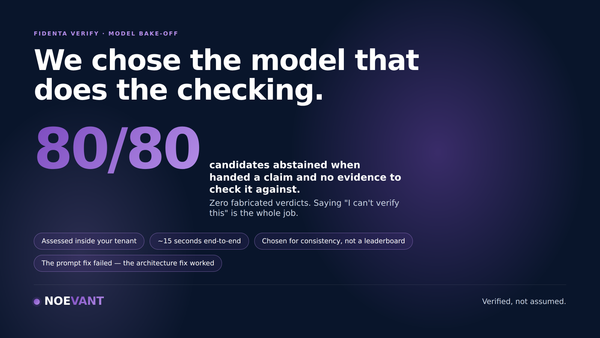
Fidenta Verify How we chose the engine behind Fidenta Verify — starting with where it runs How we chose the model behind Fidenta Verify — starting not with quality, but with where your documents stay put.
langchain Why Verification Cannot Be Bought Off the Shelf Our promise is never assume, verify. That is a claim about architecture, so it is worth being specific about what it requires.
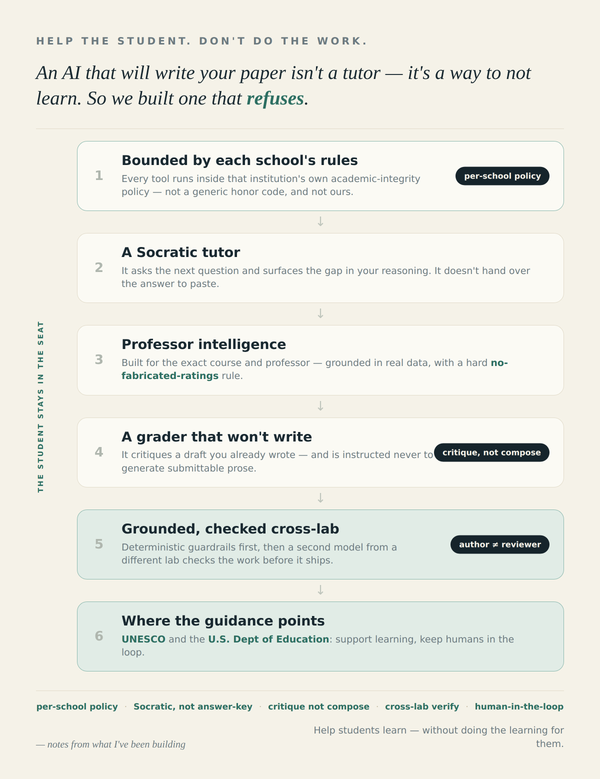
AI We Build AI That Refuses to Do the Work: Ethics, Engineered Into Study Tools The easiest thing to build in ed-tech is a machine that writes the paper. The most defensible thing is to refuse. Here is how our verification discipline looks pointed at study tools for real college courses.
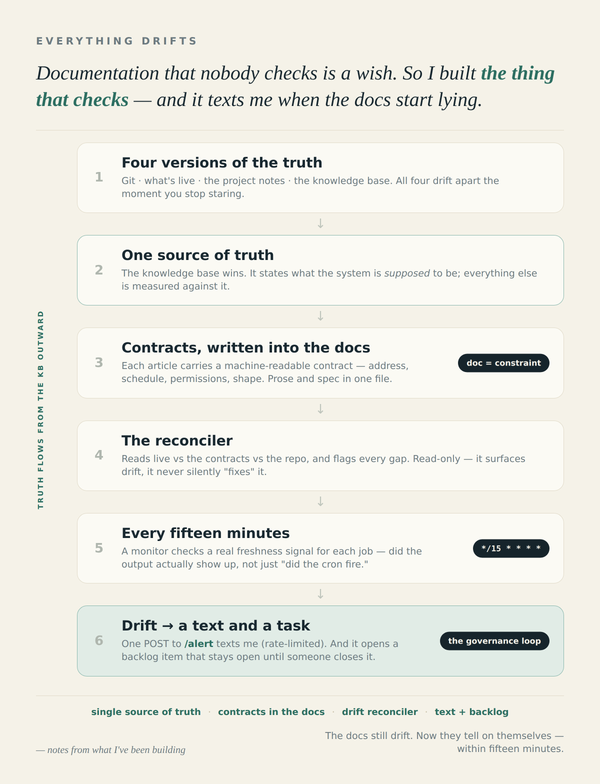
AI The Docs Were Lying: How We Keep an AI System Honest About Itself Documentation drifts. We pointed our verification discipline inward — a knowledge base as the single source of truth, machine-readable contracts inside the docs, and read-only workers that reconcile live against the contracts and text us the moment they disagree.
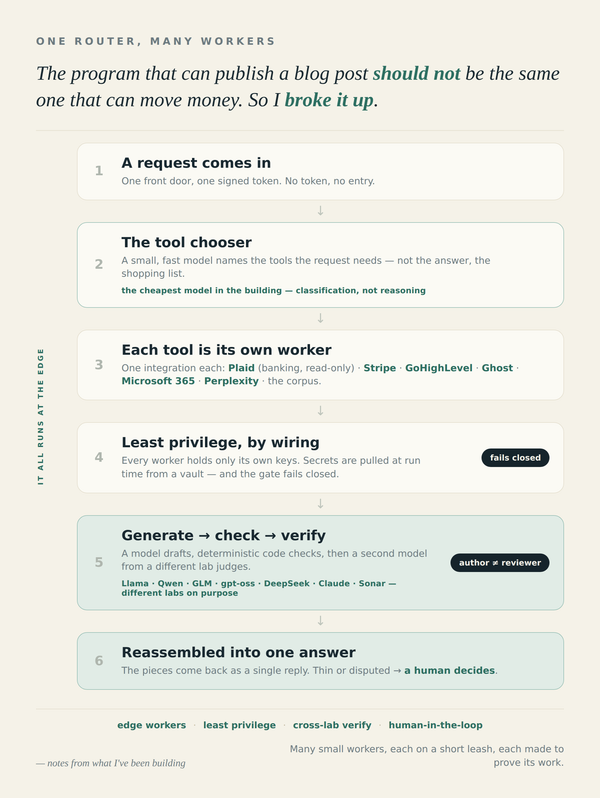
AI One Program That Could Do Everything: Why We Broke It Apart One big program that does everything is the least defensible thing you can build. Here is how we took ours apart — a router, one integration per worker, scoped keys, and a second model from a different lab checking the first.
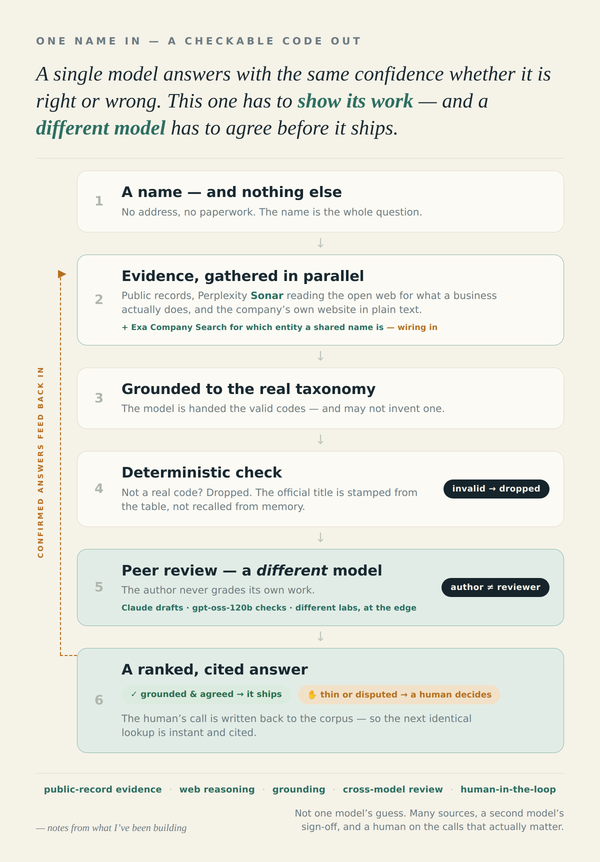
AI The Author Never Grades Its Own Work: A Classifier Built to Be Verified A single model answers with the same confidence whether it is right or wrong. Here is the composable pattern we use to make an answer you can actually check — grounding, an independent reviewer, and a human on the calls that matter.
AI A model that never grades its own exam: what a nursing-exam study tool taught us about AI trust Confidence is not accuracy. What a nursing-exam study tool taught us about building AI you can actually trust — corroboration over conviction.
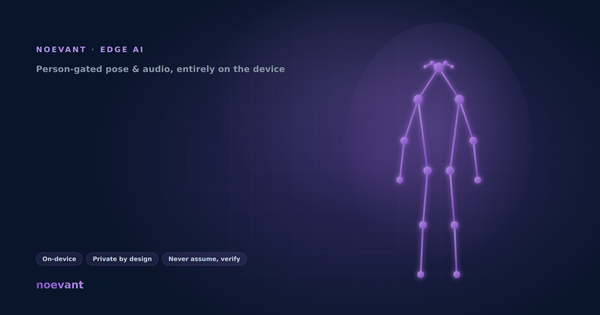
Edge AI Never Assume, Verify: Proving an At-Home Edge Box Before It Ever Ships Person-gated inference lets one accelerator stay mindful of pose and audio at once — and everything it sees stays inside the home. How we proved it before trusting a single household to it.
AI Products Telecommunications Infrastructure Deserves Better Intelligence Noevant's intelligence layer extends into telecommunications infrastructure. The SBC Analyzer is what happens when deep domain knowledge becomes an AI product.
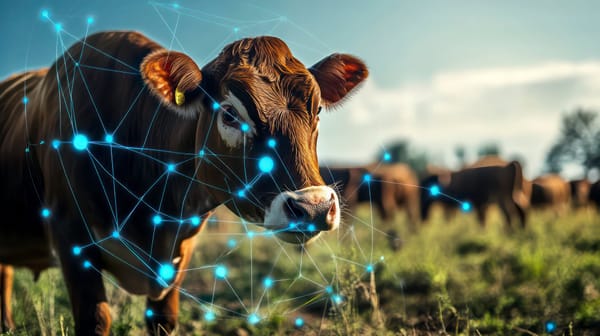
R&D Same Box, Different Question: What Succura's Architecture Could Do for a Cattle Herd Succura's edge-AI box watches for a person on the floor and escalates. Could the same architecture watch a herd — static cameras plus a scheduled autonomous drone — and flag a specific animal that hasn't been seen in days? An honest art-of-the-possible look at what's real, what hardware it needs, an
What an AI Chief of Staff Actually Does "AI chief of staff" gets used loosely. Here's what one actually does for a high-revenue operator — persistent memory, cross-company context, and execution — based on a system run in production across six companies.