Why Verification Cannot Be Bought Off the Shelf
Our promise is never assume, verify. That is a claim about architecture, so it is worth being specific about what it requires.

Noevant
Our promise is never assume, verify. That is a claim about architecture, not a slogan — so it is worth being specific about what it requires, and why it is not something a framework provides.
The failure mode we build against
An AI system produces an answer. It is fluent, plausible, and specific. Nothing errors. The latency is normal.
It is also wrong, and nothing in the system knows.
This is the default state of most AI tooling. The output is trusted because it was produced, not because it was checked. Every guarantee downstream rests on that unexamined step.
What we do instead
Work is separated by what can actually be known.
Deterministic structure. Parsing, extraction, and known-pattern rules run as code, not inference. A rule either matched or it did not. There is nothing to verify because nothing was guessed.
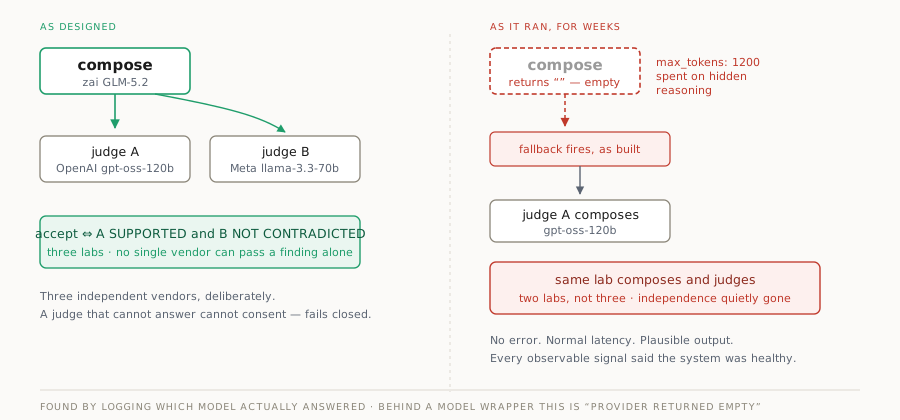
Gated judgment. Where genuine inference is required, one model composes and two independent models — from different labs — assess the result against the source evidence. A claim is accepted only when the first supports it and the second does not contradict it. A model that fails to answer cannot supply consent; the gate fails closed.
Visible refusals. Candidates that fail the gate are shown, not silently discarded. A verification step you cannot inspect is a marketing claim.
Why a general-purpose framework does not supply this
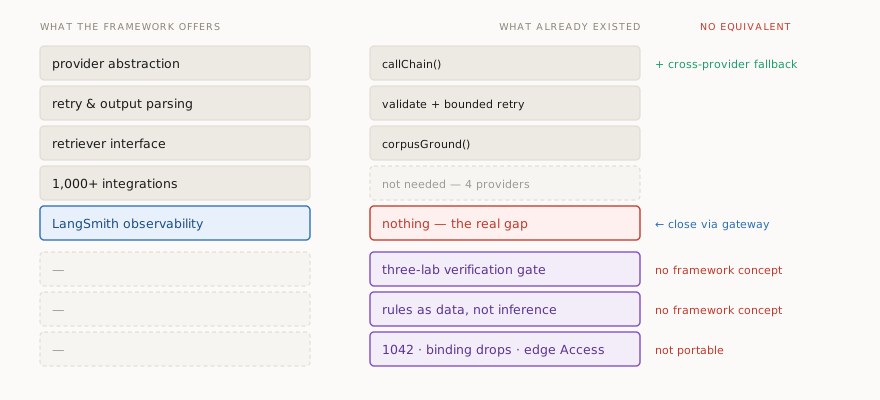
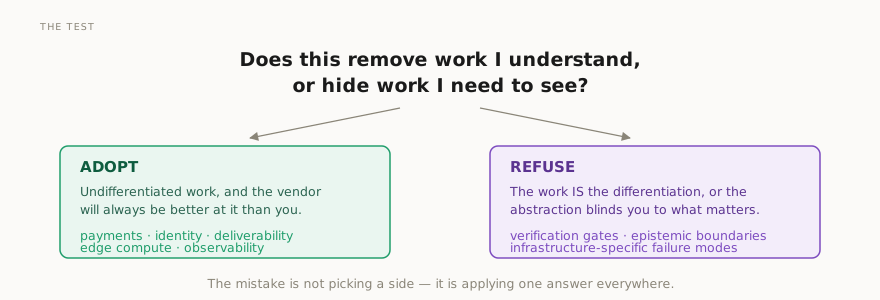
Orchestration frameworks are built to compose steps and swap providers quickly. They are good at that, and for many products they are the right choice.
They do not encode an epistemic position — a considered view about which outputs are facts, which are inferences, and what evidence each requires. That has to be designed for the domain, because the answer differs by domain: what counts as sufficient evidence in a network configuration review is not what counts in a contract review.
There is also a practical dimension. We recently found a composing model silently returning empty responses and falling through to a fallback — a three-lab pipeline running as two, with no error raised and plausible output throughout. It was caught because we own and instrument the call path. Behind a general abstraction, that symptom is an anonymous provider hiccup.
We would rather find our own failures than inherit an abstraction that hides them.
What this means for you
When a Noevant system reports a finding, the finding carries its evidence, the verdict of each independent reviewer, and the material it was grounded in. Where the system could not determine something, it says so and asks, rather than filling the gap.
That is the difference between a system that produces answers and one that produces answers you can defend.
Never assume, verify.
The silent demotion, in twenty seconds.
This piece first appeared on jessemyers.ai.